When is Weld Inspection Required in Florida?
Weld integrity is a critical factor in construction, especially for bridges, buildings, and other infrastructure projects. In Florida, stringent regulations ensure that welding practices meet safety and quality standards. Cornerstone Inspection & Thermal (https://www.cornerstonendt.com/) provides expert weld inspection services to help contractors and engineers comply with state and federal requirements, reduce risks, and maintain structural integrity.
Understanding Weld Inspection
Weld inspection is the process of examining welded joints to ensure they meet design, quality, and safety standards. Welding defects, even minor ones, can compromise the strength of a structure, leading to potential failures or costly repairs. Inspections are performed using both
Non-Destructive Testing (NDT) techniques and visual evaluations, depending on the project requirements.
Common weld defects include:
- Cracks or porosity in weld metal
Undercutting along the weld edge
Incomplete fusion or penetration - Slag inclusions or contamination
- Distortion of the welded components
Detecting these issues early is crucial to prevent structural failures, particularly in bridges and heavy construction projects where safety is non-negotiable.
Regulatory Requirements for Weld Inspection in Florida
Florida adheres to federal and state-level regulations that govern welding practices in construction. Key regulatory bodies include:
- American Welding Society (AWS)
○ Sets industry standards for weld procedures, testing, and inspector certification
○ AWS D1.1 is the primary standard for structural steel welding - Florida Department of Transportation (FDOT)
○ Enforces requirements for bridge construction and highway infrastructure
○ Specifies inspection frequency, methods, and documentation - Occupational Safety and Health Administration (OSHA)
○ Ensures workplace safety for welding personnel
○ Regulates proper training, equipment, and safety protocols
Adhering to these standards is mandatory for all construction projects in Florida, particularly those involving public infrastructure.
Situations Requiring Weld Inspection
Weld inspections are required at multiple stages of construction and for different types of projects. Key scenarios include:
1. Pre-Construction and Fabrication
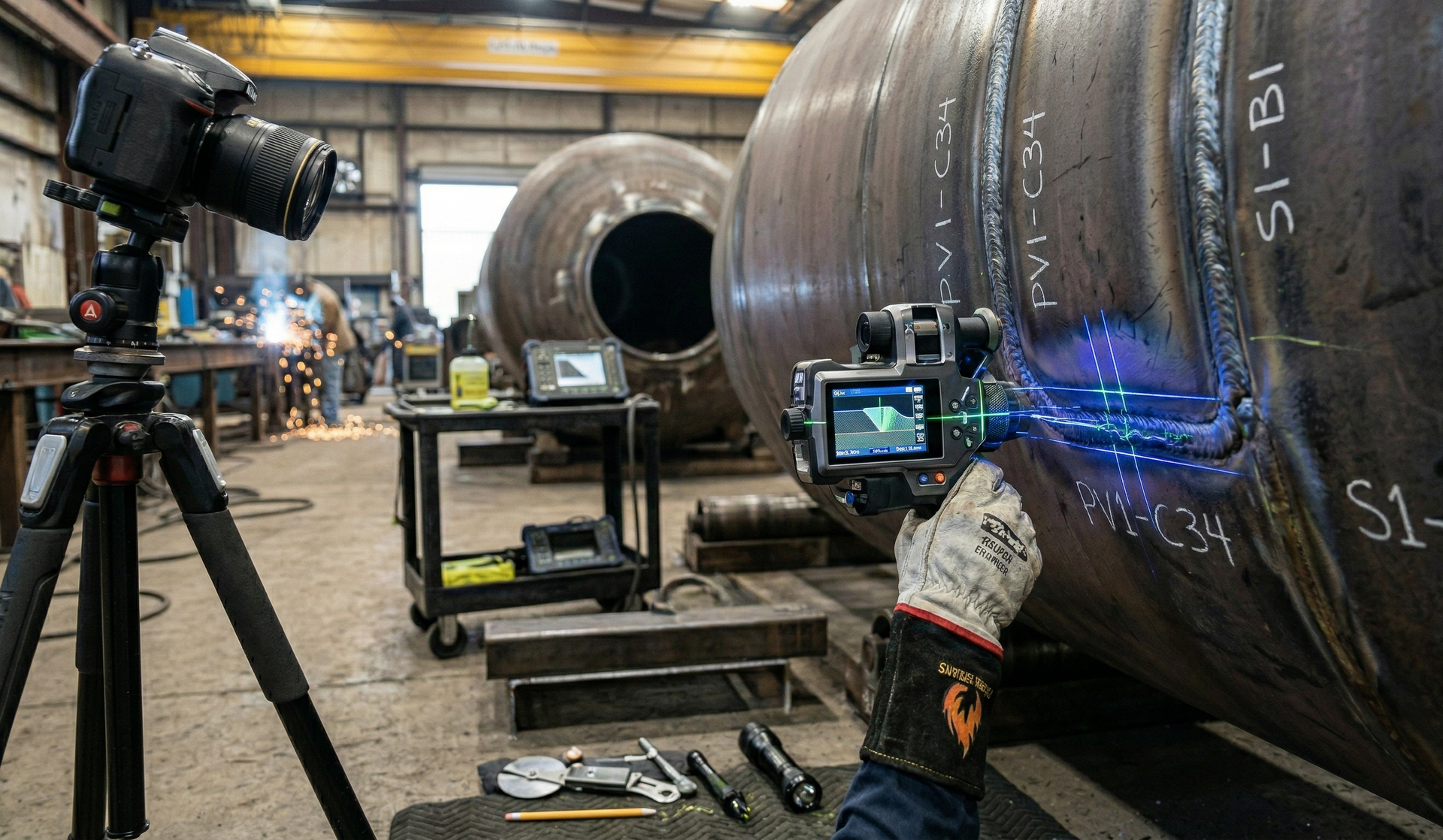
Before steel or metal components are installed on-site, welds are inspected at the fabrication stage to ensure compliance with design specifications. This proactive approach prevents defective materials from being incorporated into the structure, saving time and cost.
2. Critical Structural Connections
Bridges, high-rise buildings, and industrial structures rely on welds in high-stress areas. Any defect in these connections can compromise the overall integrity of the project. Inspections are mandatory for:
- Primary load-bearing beams
- Trusses and supports
- Connections subjected to vibration or dynamic loading
3. Post-Welding and Heat Treatment
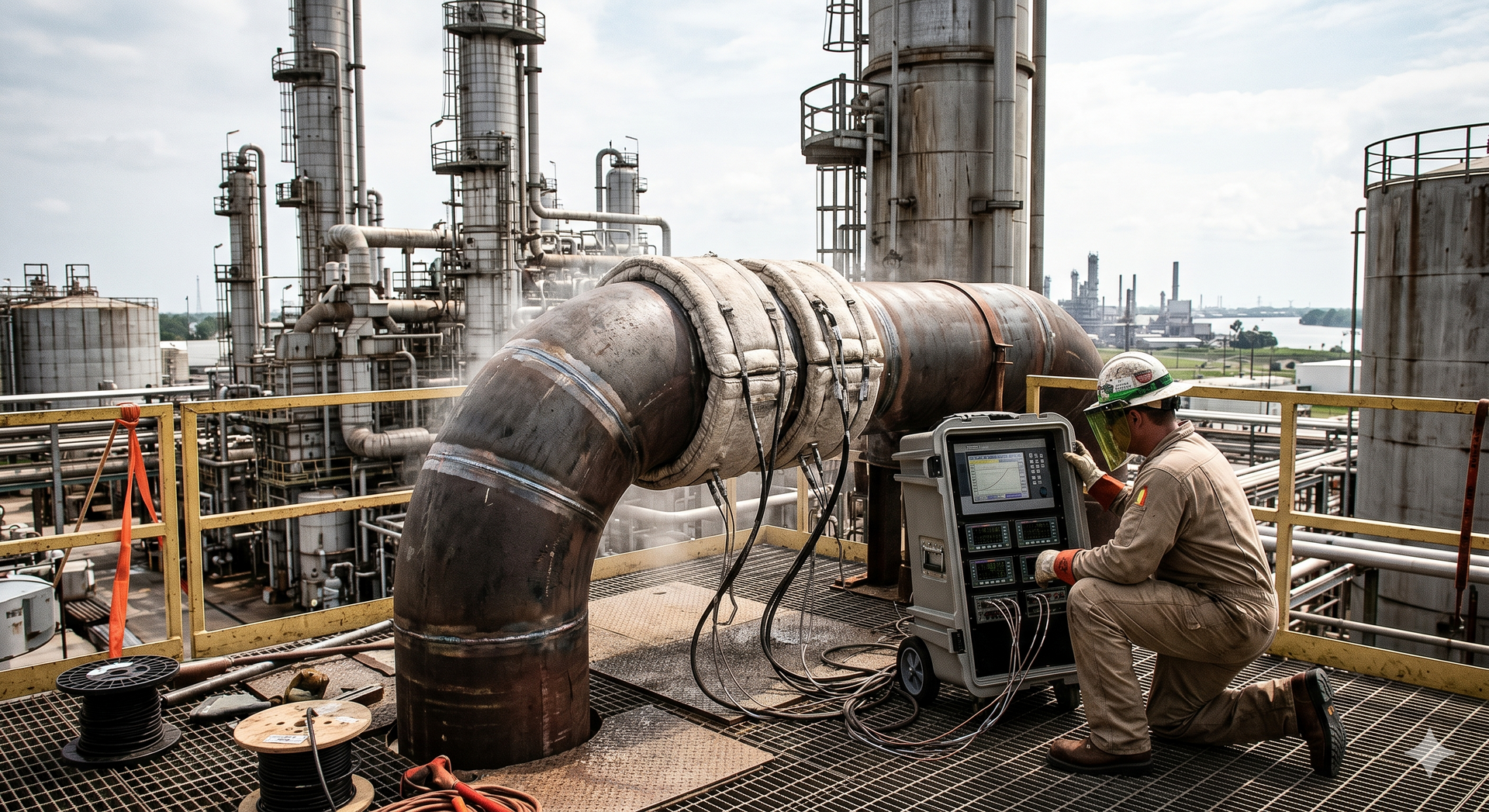
After welding and heat treatment processes, inspections are conducted to verify that the welds have not been weakened or distorted. This ensures that thermal effects have not caused cracks, warping, or other structural issues.
4. Periodic Maintenance
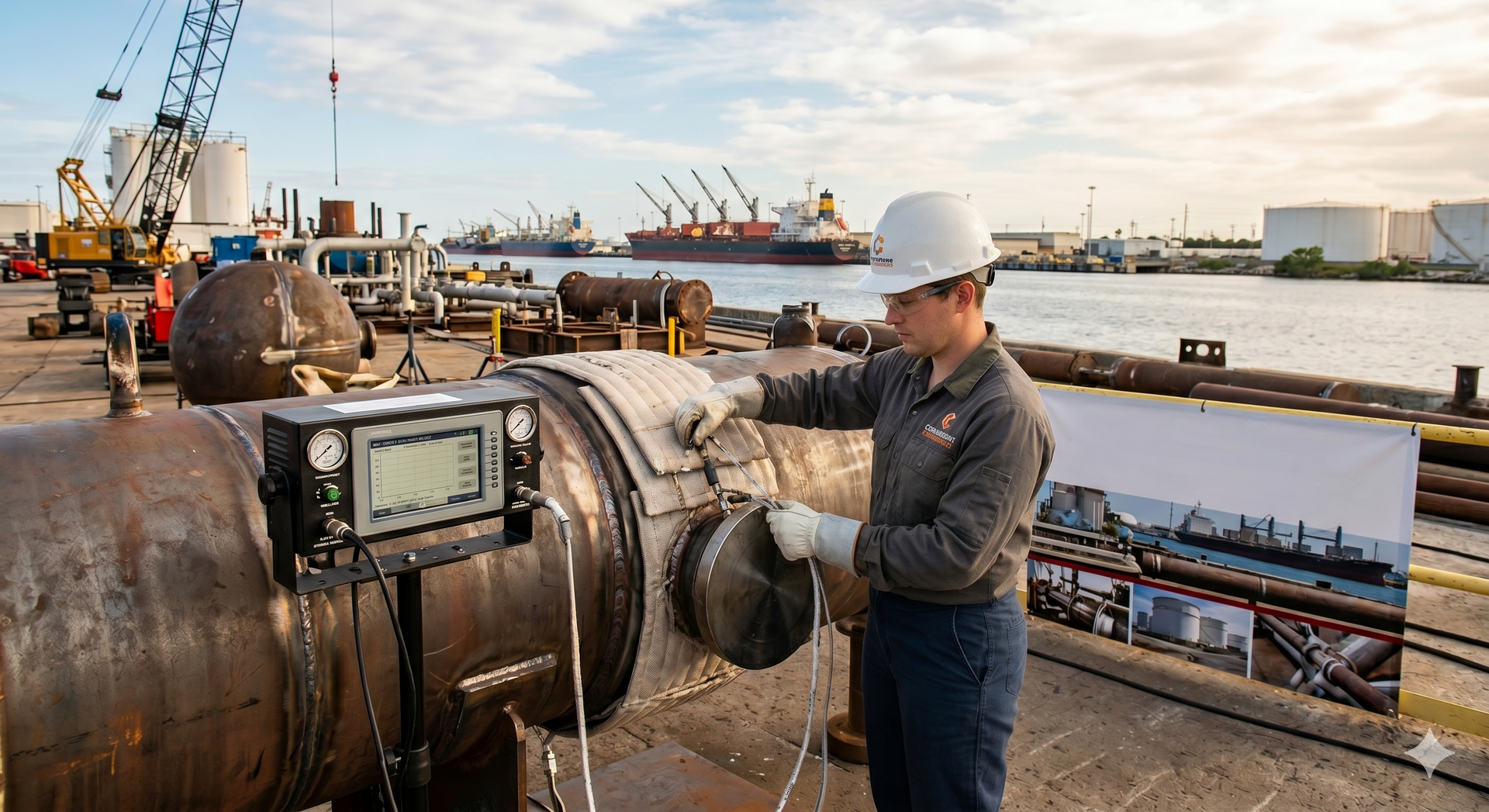
For existing infrastructure, weld inspections are required during routine maintenance. Bridges, pipelines, and steel structures often experience fatigue or corrosion over time, making periodic weld evaluation crucial for safety and longevity.
Types of Weld Inspection Methods
Several methods are used to inspect welds, ranging from visual inspections to advanced NDT techniques. Choosing the right method depends on the material, location, and safety requirements.
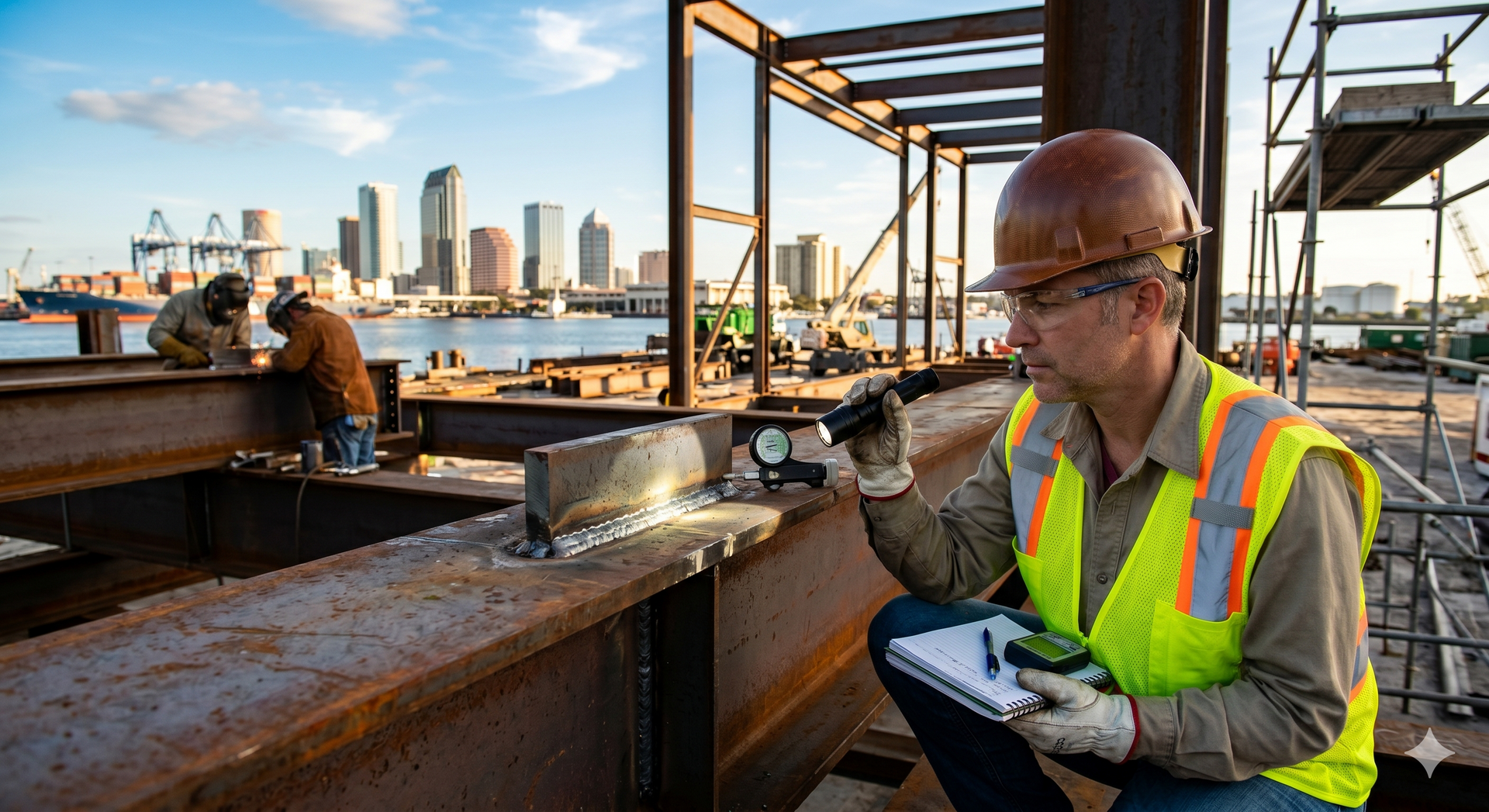
1. Visual Inspection
- The most basic method, often performed by certified weld inspectors
- Identifies obvious defects such as cracks, undercuts, misalignment, or incomplete fusion
- Often a preliminary step before advanced testing
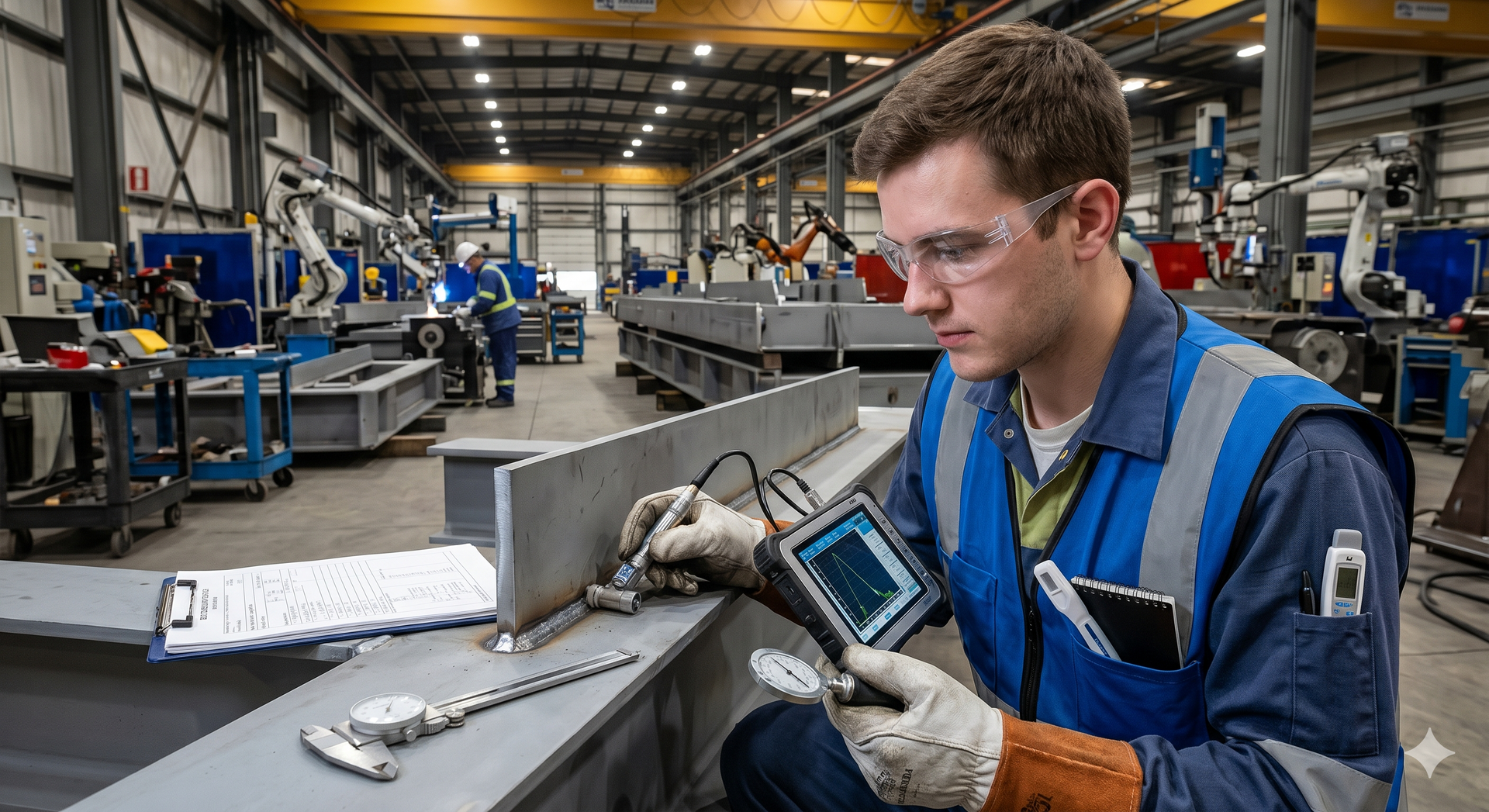
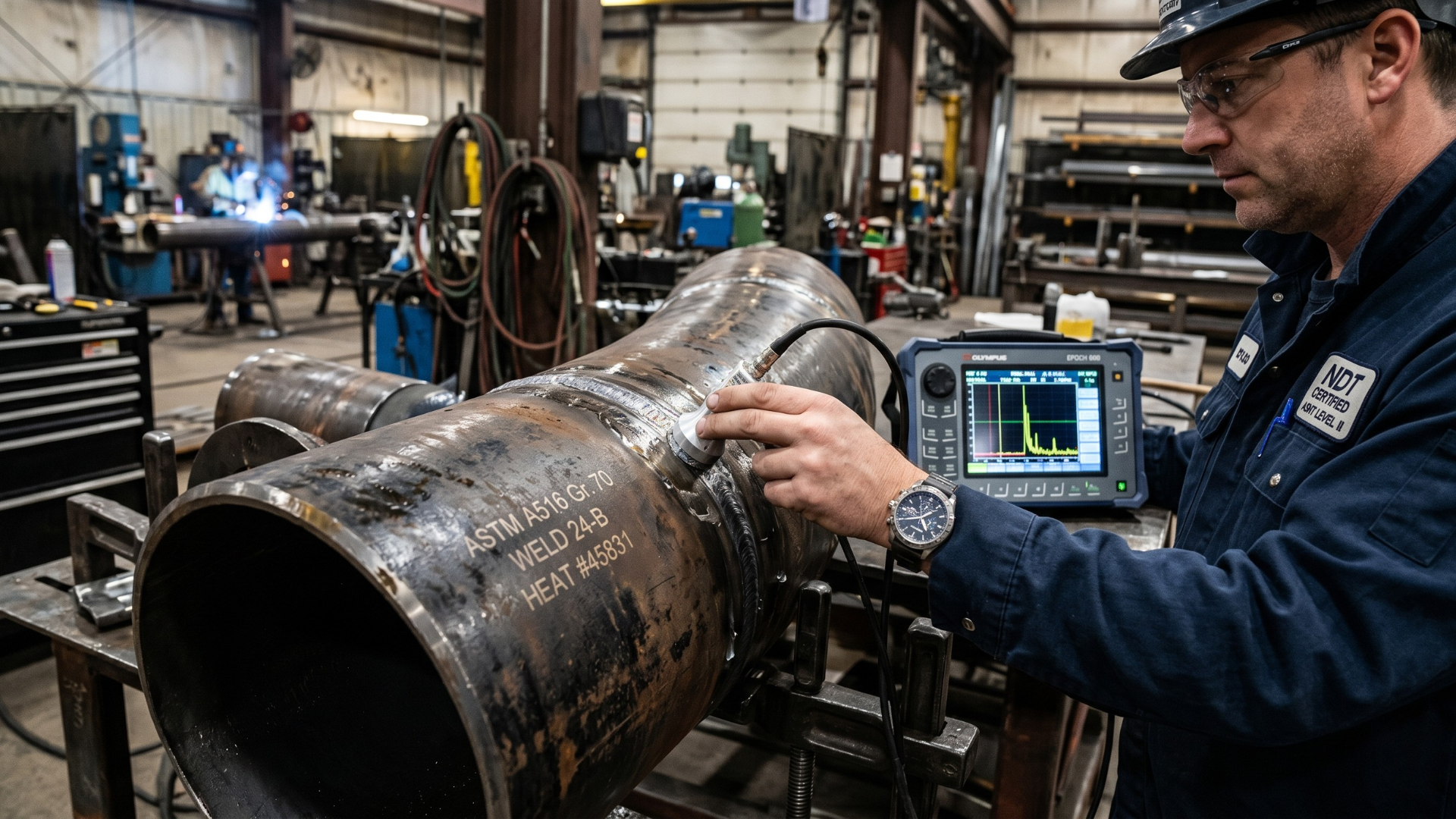
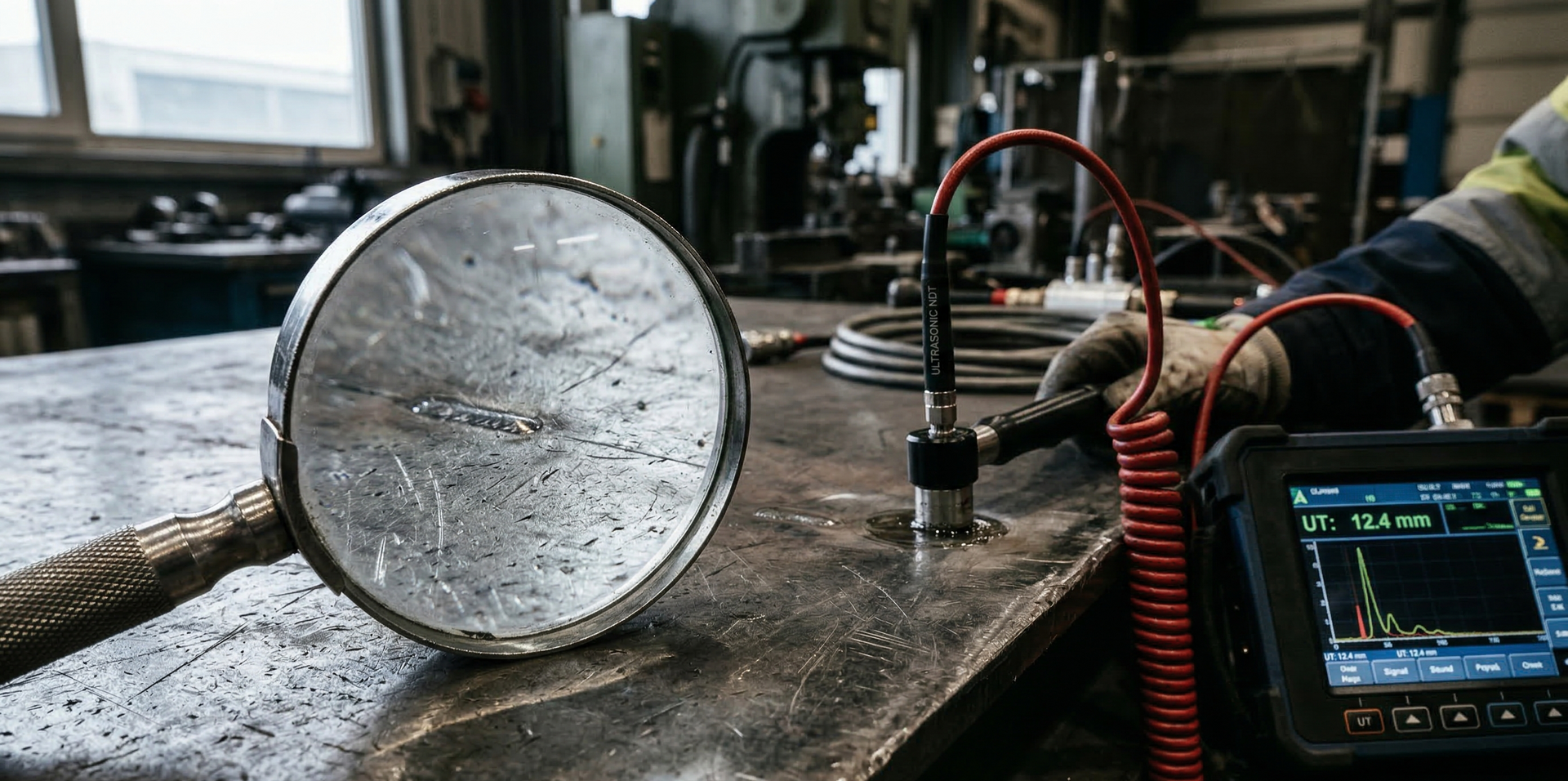
2. Ultrasonic Testing (UT)
- Uses high-frequency sound waves to detect internal flaws
- Can identify cracks, voids, and lack of fusion within the weld
- Suitable for thick steel components or critical connections
3. Radiographic Testing (RT)
- X-rays or gamma rays are used to produce images of weld interiors
- Detects internal defects that visual inspection cannot identify
- Provides a permanent record for compliance and quality control
4. Magnetic Particle Testing (MT)
- Detects surface and near-surface defects in ferromagnetic materials
- Effective for identifying cracks, inclusions, or undercut welds
- Often used in combination with visual inspection for thorough evaluation
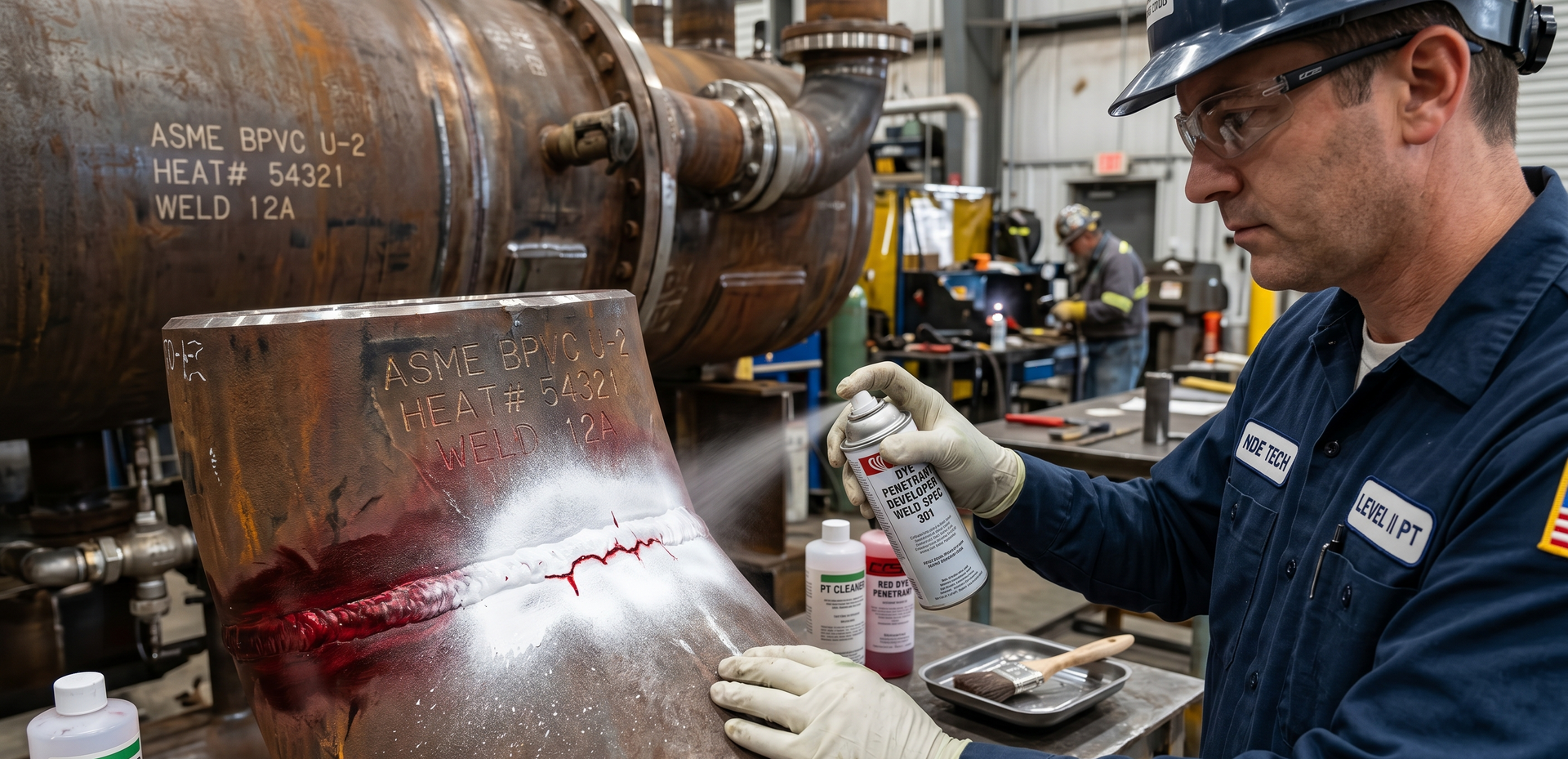
5. Dye Penetrant Testing (PT)
- Applies a liquid dye to the weld surface to highlight cracks or porosity
- Simple, cost-effective, and ideal for non-ferromagnetic metals
- Often used on small or intricate components
Benefits of Professional Weld Inspection
Hiring a certified weld inspection service, like Cornerstone Inspection & Thermal, provides multiple advantages:
- Safety Assurance: Prevents structural failures and accidents
- Regulatory Compliance: Meets AWS, FDOT, and OSHA standards
- Quality Control: Ensures all welds meet design specifications
- Cost Efficiency: Identifies defects early, reducing the need for costly repairs
- Documentation: Provides detailed reports for project records and audits
Certification and Qualifications for Weld Inspectors
In Florida, weld inspections must be performed by certified professionals to ensure accuracy and credibility. Certifications include:
- Certified Welding Inspector (CWI) – AWS certification for inspecting structural welds
- Certified Welding Educator (CWE) – Focuses on training and education in welding standards
- NDT Technician Certification – Includes ultrasonic, radiographic, and magnetic particle testing
Working with certified inspectors guarantees that inspections comply with state and federal standards while maintaining safety and quality.
Choosing the Right Weld Inspection Service in Florida
Selecting the right service provider is critical for compliance, safety, and efficiency. Cornerstone Inspection & Thermal offers:
- Experienced inspectors certified in AWS and NDT methods
- Advanced inspection equipment for precise results
- Detailed reporting with actionable recommendations
- Flexible scheduling to align with construction timelines
By choosing a professional partner, contractors can focus on construction while ensuring that all welds meet safety and quality standards.
Real-World Examples of Weld Inspection
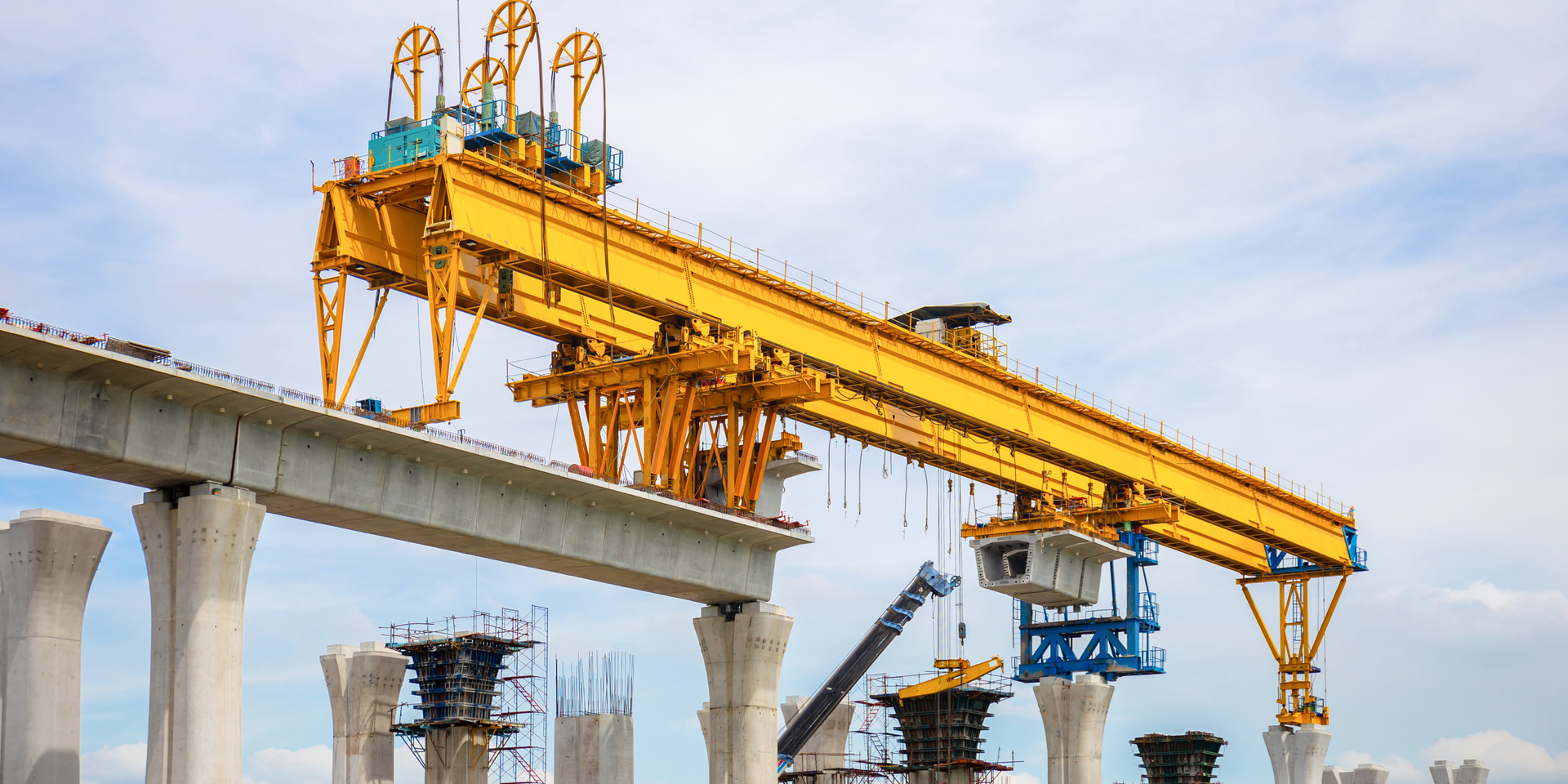
1. Bridge Construction Projects
- Inspectors evaluate welds on steel beams and trusses
- Defects detected early prevent potential failures during bridge operation
2. High-Rise Buildings
- Weld inspection ensures that load-bearing connections are robust
- Critical for safety during extreme weather events or seismic activity
3. Industrial Facilities
- Welding is common in pipelines, storage tanks, and machinery
- Regular inspections prevent leaks, structural damage, or operational hazards
Why Cornerstone Inspection & Thermal?
Cornerstone Inspection & Thermal has extensive experience providing weld inspection services across Florida. Our team combines technical expertise, advanced equipment, and in-depth knowledge of AWS, FDOT, and OSHA standards to deliver precise, reliable inspections. Services include:
- On-site weld inspection using visual, ultrasonic, radiographic, magnetic particle, and dye penetrant methods
- Comprehensive reporting with recommendations
- Consultation for weld repair or corrective actions
- Support for project documentation and regulatory compliance
Contact Cornerstone Inspection & Thermal
today to schedule weld inspection services for your project:
Phone: 225-235-4472
Email: terry@cornerstonendt.com
Website: https://www.cornerstonendt.com
Conclusion
Weld inspection is not just a regulatory requirement in Florida; it is a critical step to ensure structural integrity, safety, and longevity. By performing inspections at multiple stages of construction and maintenance, professionals can detect defects early, prevent failures, and maintain compliance with state and federal standards.
Partnering with an experienced and certified team like Cornerstone Inspection & Thermal ensures that every weld is inspected thoroughly, every defect is addressed, and every project meets the highest safety and quality standards